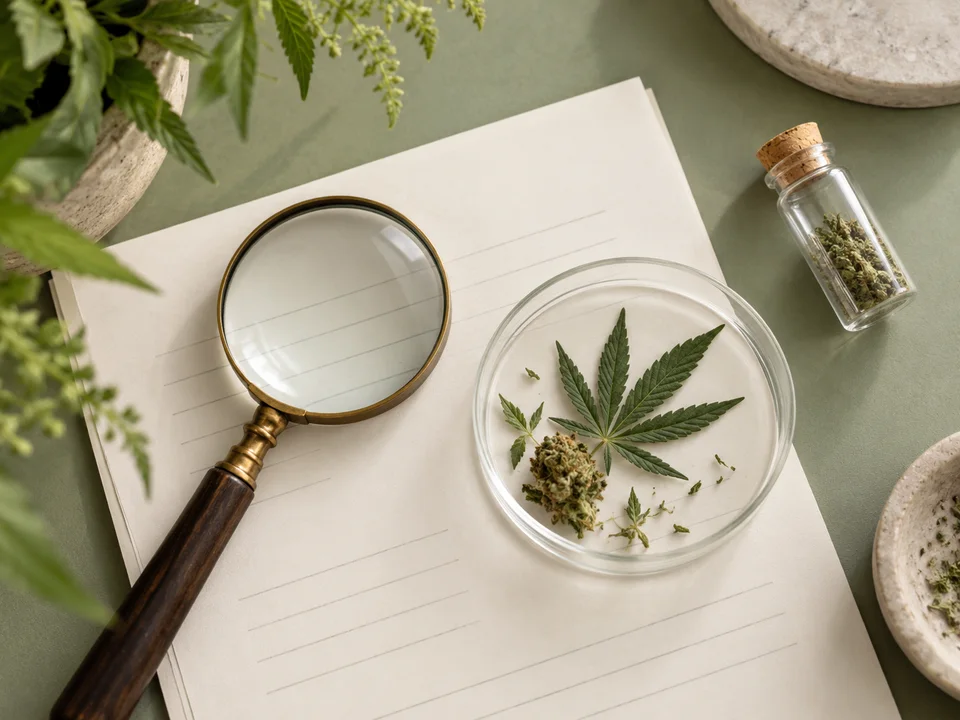
A COA reports test results for a sample. It does not certify that a product treats a condition or that every possible risk was tested.
1. Match the product and batch
Compare the product name and batch or lot number on the report with the package. Check whether the sample was the finished product. A report for a different batch or a raw ingredient leaves a gap.
2. Identify the laboratory and date
Look for a named laboratory, report identifier, test date, and methods. Prefer a report you can verify with the lab. Accreditation should be relevant to the method and material tested; a logo alone does not explain the scope.
3. Read the units
CBD may be expressed in mg/g, mg/mL, percentage, or milligrams per unit. Do not compare numbers until the units and sample basis match. “Not detected” means below a method’s detection limit; it is not a universal promise of absolute zero.
4. Check what else was tested
A potency panel is not the same as testing for pesticides, heavy metals, residual solvents, or microbial contamination. Look for results and reporting limits rather than simply counting “pass” badges. The FSA’s analysis of retail CBD products shows the range of measurements involved. [1]
5. Know the report’s limits
A report describes the submitted sample and the requested tests. It cannot establish clinical effectiveness, predict a drug test, or decide suitability for an individual. Save a copy and ask the seller to explain missing information before relying on the label.
Sources & scope
Sources checked October 19, 2026. Linked material supports the specific claims discussed; practical label checklists are editorial guidance. This article has not received clinical or veterinary peer review. Read our editorial approach.
Educational information for adults. Not a diagnosis, treatment plan, product endorsement, or personal dosing recommendation. Ask a qualified clinician or veterinarian about your situation.